Transaction Trails to Triumph: Mapping Payment Methods Through Game Regulations in Remote Progressive Play
Written by Quinn Simmons · Jun 30, 2026

Transaction Trails to Triumph: Mapping Payment Methods Through Game Regulations in Remote Progressive Play
Remote progressive play connects slot machines and bingo platforms across networks where contributions build toward shared jackpots, and payment methods form the backbone that moves funds while satisfying layered game regulations in multiple jurisdictions. Observers note that transaction trails begin at the point of deposit and extend through verification steps, game play contributions, and eventual payouts when progressive thresholds activate. Data from industry reports indicates that operators must align these trails with rules set by bodies such as the Nevada Gaming Control Board, which oversees digital payment security standards for networked progressives operating in the United States.
Core Payment Channels Under Regulatory Scrutiny
Electronic wallets, bank transfers, and prepaid vouchers serve as primary channels in remote progressive environments because regulators require audit-ready records at each transfer stage. Credit and debit card transactions undergo address verification and velocity checks before any portion of a deposit feeds into a progressive pool, whereas e-wallet providers integrate API hooks that flag contributions automatically. Researchers at academic institutions have documented how these hooks reduce reconciliation errors by up to 40 percent compared with manual batch processing used in earlier systems.
Alternative options such as cryptocurrency transfers appear in jurisdictions that have issued specific guidance, yet they trigger additional identity layers including blockchain analytics reports submitted to compliance teams. In June 2026 several platforms updated their protocols to accommodate real-time settlement rails that shorten the window between a winning spin and fund release while still preserving the full regulatory chain of custody.
How Game Rules Shape Transaction Mapping
Progressive jackpot rules dictate that a fixed percentage of each qualifying bet must route into the shared meter, and payment processors must isolate that percentage in segregated ledgers visible to auditors. When a player selects a bet level that meets the threshold for the top prize tier, the system logs the transaction identifier alongside the game outcome timestamp. Those logs become the reference points during payout reviews, ensuring no contribution is omitted or double-counted.
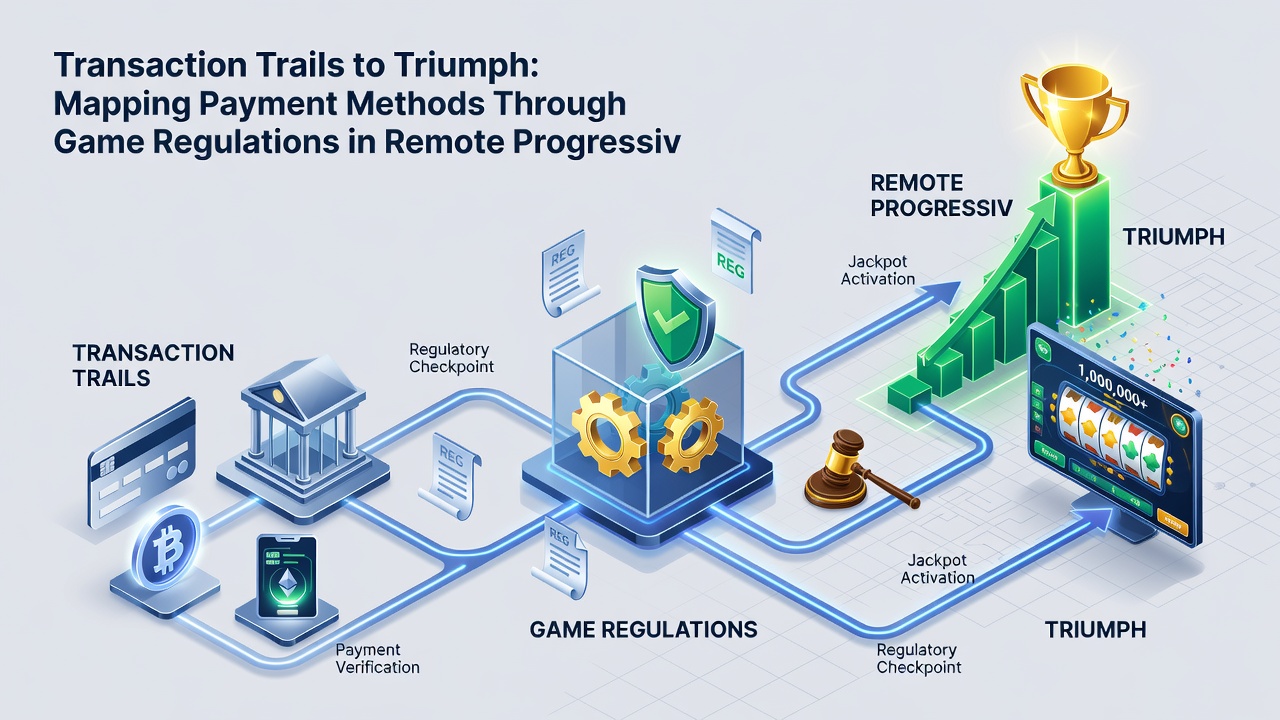
Regulations in regions outside the United Kingdom, such as those administered by the Malta Gaming Authority, mandate that progressive meters remain accessible for inspection at any hour, which forces payment gateways to maintain continuous data feeds rather than periodic summaries. One study released by a European research consortium revealed that continuous feeds cut dispute resolution times by nearly half when jackpot claims involve cross-border players.
Compliance Pathways Across Jurisdictions
Operators map each payment method to teh specific license conditions of every market they serve, creating decision trees that route transactions through the strictest applicable rule set. For example, Australian regulatory guidance requires source-of-funds declarations above certain thresholds, prompting platforms to embed questionnaire prompts directly into the deposit flow. Canadian provincial frameworks add geolocation confirmation before any progressive contribution registers, thereby linking payment authorization with physical presence verification.
Payment processors that serve multiple markets maintain modular compliance modules, allowing a single transaction to satisfy overlapping requirements without redundant data entry. Figures published by the International Association of Gaming Regulators show that platforms using modular modules experienced 30 percent fewer compliance queries during 2025 audits.
Emerging Patterns in June 2026
By June 2026 several jurisdictions had introduced mandatory digital receipt standards that attach cryptographic hashes to every progressive contribution record. These hashes travel with the funds from deposit through payout, enabling regulators to reconstruct entire trails within minutes rather than days. Industry groups report that early adopters of hashed receipts observed faster approval cycles for large progressive wins, particularly when winners resided in different licensing regions from the operator.
Simultaneous updates to open banking directives in parts of Europe allowed instant verification of account ownership, further tightening the link between payment identity and game eligibility. Observers note that these combined measures have reduced instances of disputed contributions in networked progressive systems.
Conclusion
Transaction trails in remote progressive play function as regulated pathways that translate deposits into jackpot eligibility and ultimately into verified payouts. Payment methods operate under detailed mapping requirements that differ by jurisdiction yet share the common goal of preserving an unbroken record from first transfer to final settlement. Data compiled through 2026 indicates that platforms maintaining transparent, modular compliance frameworks achieve smoother regulatory interactions while supporting the continued growth of cross-network progressive games.