Tracing Digital Handshakes: How Apps Verify Mobile Slot and Bingo Wins Before Processing Progressive Payouts
Written by Alex Hughes · Jun 13, 2026
Tracing Digital Handshakes: How Apps Verify Mobile Slot and Bingo Wins Before Processing Progressive Payouts
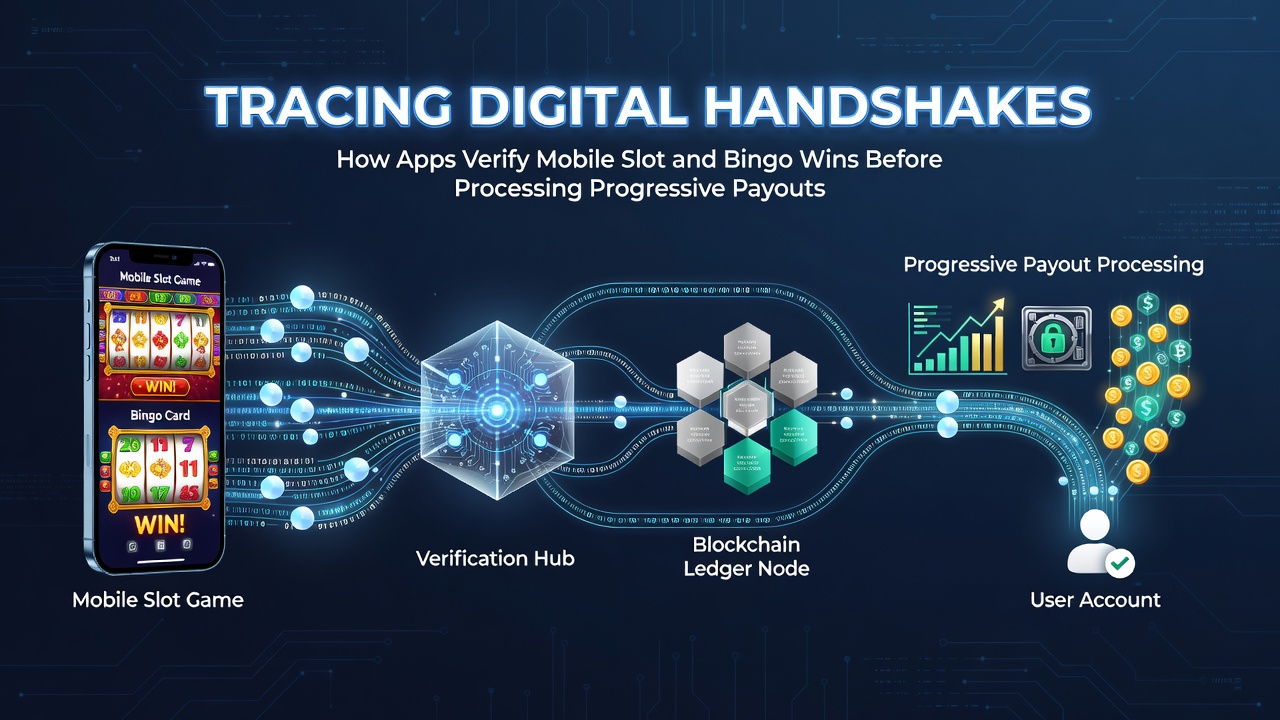
The verification of wins in mobile slot and bingo games relies on a series of encrypted communications that occur between the device and remote servers, and these exchanges ensure that outcomes match certified random processes before any progressive payout calculation begins. Developers design the systems so that each player action triggers a data packet containing session identifiers, bet details, and timestamps, all of which travel across secure channels to prevent interception or alteration. Servers then cross-reference the incoming request against stored game logic, and this step confirms whether a claimed win aligns with the underlying algorithm.
Core Components of Secure Verification Flows
Random number generation happens on the server side in most regulated platforms, which means the app itself never determines results locally, and this architecture reduces opportunities for tampering while allowing operators to maintain consistent records across millions of sessions. When a spin completes or a bingo pattern forms, the server compares the generated sequence against predefined paytables, including those that feed into progressive pools, and only after this match does the system generate a confirmation token. The token travels back to the app, carrying cryptographic signatures that the client software checks before displaying any win notification to the user.
Progressive jackpots add another layer because multiple games or sites often contribute to a shared pool, and therefore the verification process must also query a central jackpot controller to update the current value and lock in eligibility. Data from the Nevada Gaming Control Board shows that linked progressive systems perform these cross-checks within milliseconds, and similar frameworks operate in other jurisdictions to maintain audit trails. Observers note that without these handshakes the risk of duplicate claims or mismatched totals would rise sharply.
Encryption and Authentication Protocols in Practice
Transport Layer Security versions 1.2 and 1.3 encrypt nearly all traffic between apps and backend systems, while additional application-layer signatures created with asymmetric keys provide a second check that the message originated from an authorized game instance. Developers frequently incorporate device attestation services supplied by mobile operating systems, and these services report whether the handset remains in a stock configuration free from rooting or sideloading that could interfere with outcome reporting. When any attestation fails the server rejects the session outright, and the player receives a notice to reinstall the application from an official store.
Industry reports from the iGaming Ontario regulator indicate that audit logs capture every handshake, including timestamps and hash values, so that later reviews can reconstruct exactly which server responded to a given mobile request. This level of detail proves useful during payout reviews, especially when progressive amounts exceed ordinary thresholds and require manual sign-off from compliance teams.
Handling Progressive Pool Updates and Eligibility Checks
Before releasing funds from a progressive pool the platform confirms that the winning combination occurred within an active betting tier and that the player account satisfied all geographic and age requirements at the moment of play. The system accomplishes this by consulting a rules engine that stores jurisdiction-specific parameters, and any mismatch pauses the payout workflow until staff review the flagged record. In June 2026 several major platforms began testing real-time blockchain anchors for jackpot ledgers, which allow external auditors to verify that pool contributions and payouts match without exposing individual player data.
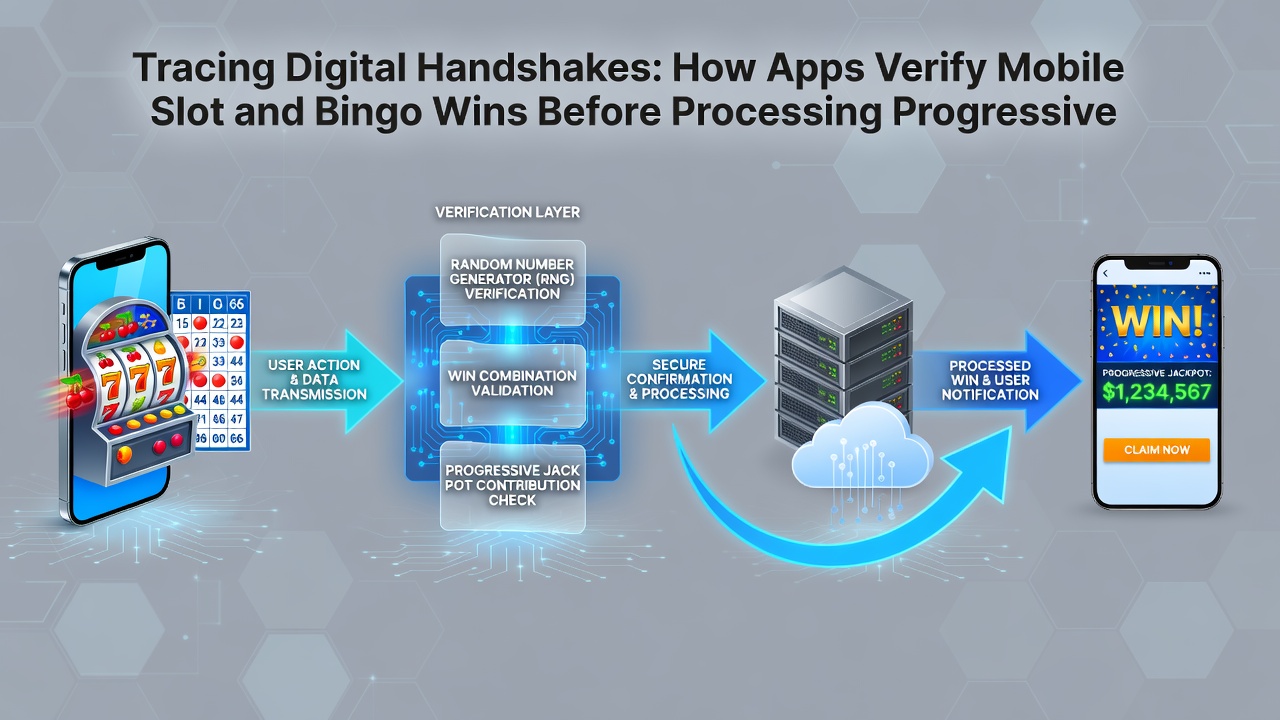
One documented workflow involves the app sending a compact binary message that includes a hash of the local game state, after which the server recomputes the same hash using its authoritative copy of the random seed and returns either an approval code or an error. Should an error appear the app displays a generic message directing the player to contact support, while the backend simultaneously opens an investigation ticket that compliance personnel examine within defined service-level agreements.
Regulatory Oversight and Technical Standards
Regulators in multiple regions require independent testing laboratories to certify both the random number generator and the communication protocols before any game reaches the public, and these labs issue reports that operators must retain for periodic inspections. The Malta Gaming Authority, for instance, publishes guidance documents that outline minimum encryption strengths and logging intervals, while the New Jersey Division of Gaming Enforcement maintains its own set of technical bulletins covering mobile client behavior. Compliance teams therefore schedule regular penetration tests that attempt to intercept or replay handshake messages, and successful defenses against such tests form part of the evidence submitted during license renewals.
Academic researchers at institutions studying digital gambling systems have published papers on the latency characteristics of these verification sequences, and their findings reveal that average round-trip times remain under 300 milliseconds even during peak traffic periods. Such performance metrics matter because players expect immediate feedback, yet operators cannot sacrifice verification depth to achieve speed.
Conclusion
Digital handshake mechanisms form the backbone of trustworthy mobile slot and bingo operations, particularly when progressive payouts are involved, and the combination of server-side generation, cryptographic signing, device attestation, and regulatory logging creates multiple overlapping safeguards. As platforms adopt newer anchoring techniques and refine their attestation methods the verification process continues to evolve while preserving the core requirement that every claimed win must survive automated and, when necessary, human scrutiny before funds leave the operator's control.