Foundations of Equity: RNG Systems Powering Fair Distributions in Linked Slot and Bingo Networks
Written by Alex Hughes · Aug 6, 2026
Foundations of Equity: RNG Systems Powering Fair Distributions in Linked Slot and Bingo Networks
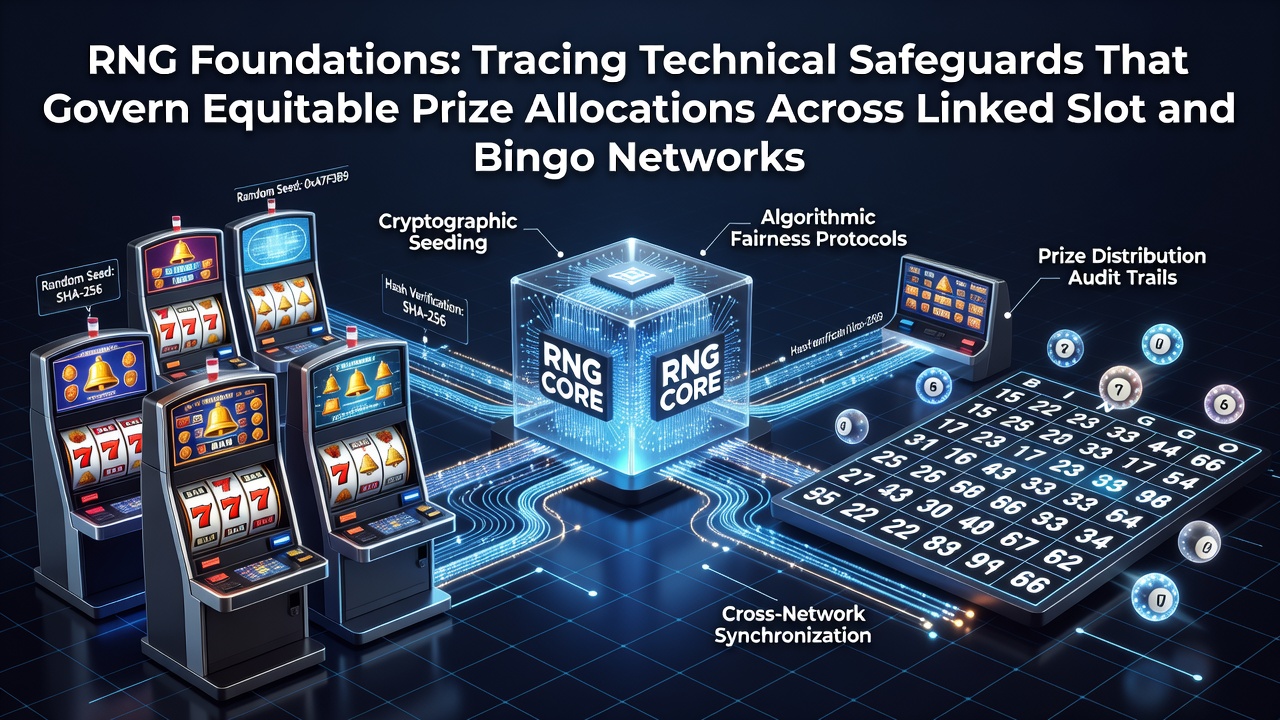
Random number generators form the core mechanism that determines prize outcomes across interconnected slot and bingo platforms, and technical safeguards ensure every allocation remains statistically independent and fair. These systems operate through pseudorandom algorithms seeded with high-entropy inputs drawn from hardware sources such as thermal noise or quantum fluctuations, which prevents predictable patterns from emerging in live play. Networked environments add layers of complexity because multiple operators share progressive pools while each terminal must receive an independent result stream that complies with jurisdictional standards.
Core Components of Gaming RNG Implementations
Modern implementations rely on cryptographically secure pseudorandom number generators rather than simpler linear congruential methods, and the shift occurred because longer cycle lengths and resistance to state reconstruction became necessary once progressive jackpots spanned multiple sites. According to standards published by the National Institute of Standards and Technology, approved algorithms must pass suites that test for uniformity, independence, and unpredictability over billions of draws. Operators integrate these generators inside tamper-resistant modules that undergo periodic audits by independent laboratories, and the audit process verifies that the live sequence matches the certified reference implementation without external interference.
Seed management practices further strengthen integrity because each session begins with a fresh entropy pool collected from multiple uncorrelated sources, and reseeding happens at intervals short enough to limit any theoretical exposure window. Bingo networks apply the same principles yet adapt them to fixed-card draws by mapping RNG outputs to ball sequences through transparent shuffling routines that regulators can replay during dispute resolution.
Safeguards Across Multi-Site Progressive Links
Linked progressive systems require additional synchronization protocols because jackpot contributions flow continuously from thousands of terminals, and any bias in RNG output could disproportionately affect one operator’s player base. Data centers therefore employ redundant RNG servers that cross-verify outputs in real time, and discrepancies trigger automatic failover to secondary units while preserving an immutable log for forensic review. Research conducted by academic groups in 2025 demonstrated that distributed ledger timestamps can anchor each draw result without exposing the underlying seed, thereby allowing regulators from different jurisdictions to confirm fairness without sharing proprietary code.
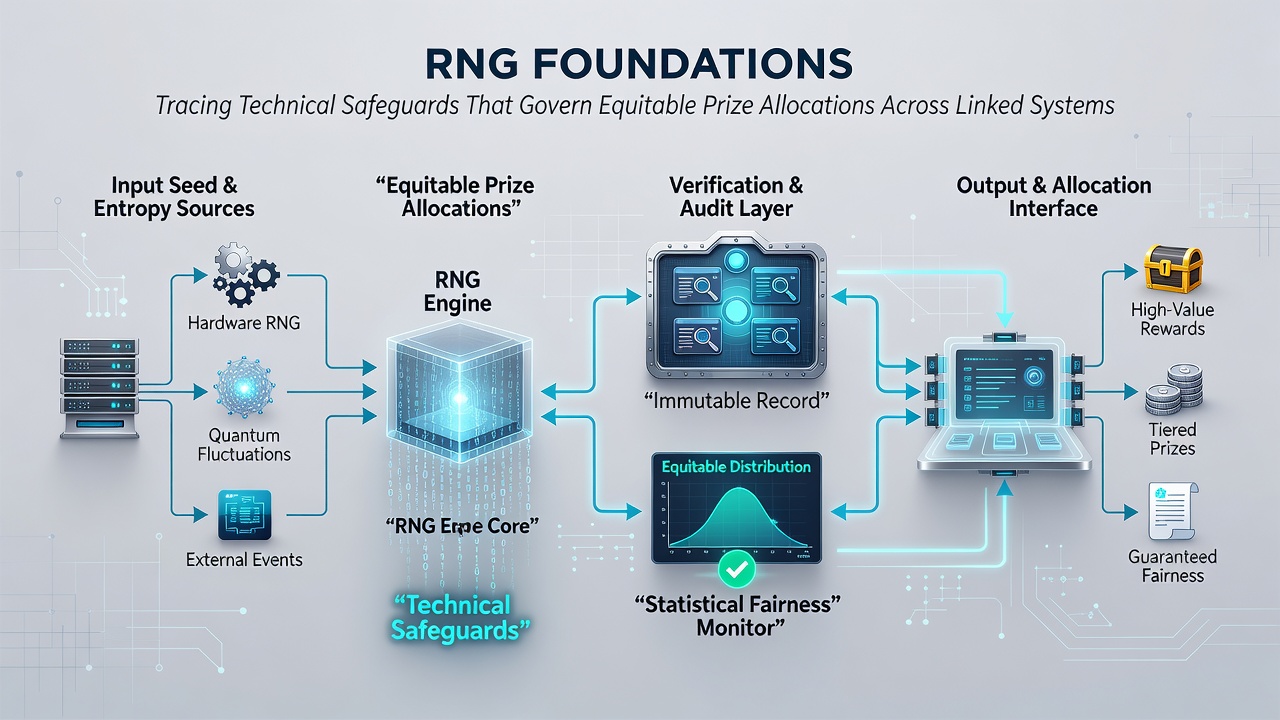
Threshold checks embedded in the allocation logic ensure that jackpot triggers remain proportional to contribution rates, and these checks run on hardware-isolated processors that cannot be altered through ordinary network commands. In August 2026 several major platforms reported upgrades that replaced older Mersenne Twister instances with newer sponge-based constructions offering provable resistance to state compromise, and the transition followed recommendations from international testing bodies operating in North America and the European Union.
Certification Pathways and Ongoing Verification
Certification begins with mathematical analysis of the algorithm followed by statistical testing on sample streams exceeding ten billion outcomes, and laboratories issue reports that regulators reference during licensing renewals. Continuous monitoring then occurs through automated sampling where a small percentage of live draws undergoes parallel verification on independent hardware, and any statistical deviation beyond established confidence intervals prompts immediate investigation. Industry associations in Australia and Canada have published joint guidelines that require operators to retain full RNG state logs for a minimum of seven years, enabling retrospective audits when large prizes are claimed.
Third-party penetration testing evaluates whether external actors could influence seed collection or output delivery, and test results feed into annual compliance filings that remain publicly accessible in many jurisdictions. These layered controls collectively reduce the probability of systematic bias to levels far below one in several trillion draws, which aligns with the theoretical expectations of properly implemented cryptographic generators.
Conclusion
Technical safeguards surrounding RNG deployments in linked slot and bingo networks rest on a combination of approved algorithms, hardware isolation, continuous statistical oversight, and cross-jurisdictional audit standards that together maintain equitable prize allocation. As network scale increases through 2026, the same foundational principles continue to guide upgrades, ensuring that fairness metrics remain measurable and verifiable regardless of how many sites participate in any single progressive pool.