Cycles and Catalysts: Regional Policies and Event Triggers Driving Reward Pool Growth in Digital Reel and Number Games
Written by Otto Perry · May 23, 2026
Cycles and Catalysts: Regional Policies and Event Triggers Driving Reward Pool Growth in Digital Reel and Number Games
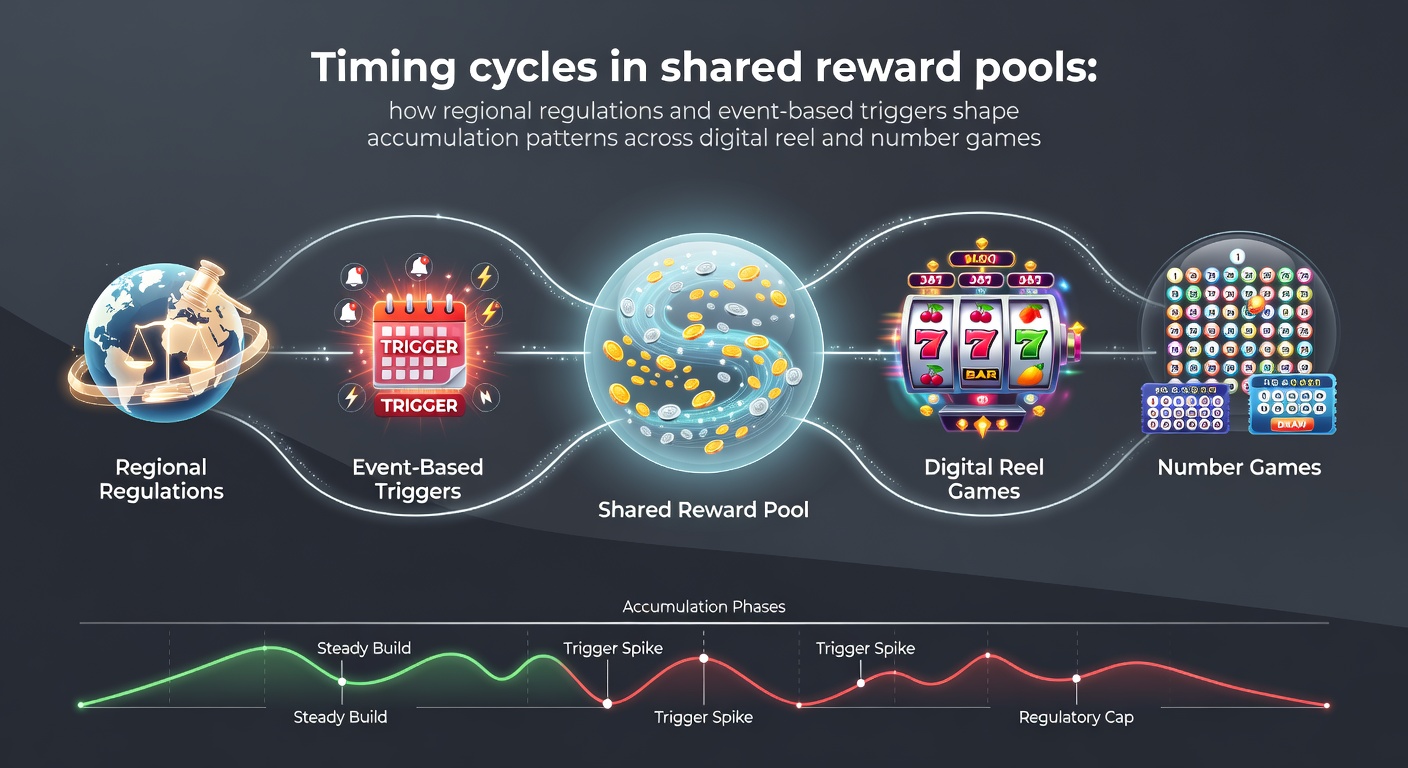
Shared reward pools in digital reel games and number-based formats operate under complex timing mechanisms where contributions accumulate at varying rates depending on regulatory frameworks and specific event triggers. These patterns emerge from the interaction between player activity levels, mandated payout structures, and external occurrences that accelerate or slow pool growth across different jurisdictions.
Regulatory Frameworks Shape Daily and Weekly Accumulation Rhythms
Regional regulations establish baseline parameters for how quickly shared pools build through player contributions in slots and number games. Licensing requirements in various territories often dictate minimum contribution percentages along with caps on maximum pool sizes before mandatory resets occur. Data from industry reports indicates that jurisdictions with stricter tax reporting intervals tend to see more predictable weekly accumulation curves compared to regions allowing greater flexibility in fund management.
European directives on remote gambling have influenced how operators structure their progressive systems since implementation phases began rolling out in prior years. Similar approaches appear in Canadian provincial frameworks where lottery corporations coordinate with slot networks to synchronize contribution schedules. These rules create recurring cycles where pools reach certain thresholds at consistent intervals throughout each month.
Event-Based Triggers Accelerate Pool Growth Patterns
Special events function as catalysts that temporarily alter standard accumulation rates in both reel and number game formats. Holiday periods, game launches, and promotional campaigns generate spikes in player engagement that directly feed into shared pools at accelerated speeds. Tournament structures tied to specific calendar dates often include contribution multipliers that compress what would normally take weeks into just several days of heightened activity.
Seasonal festivals and sporting events produce measurable shifts in number game participation across digital platforms. Observers note that these triggers create distinct peaks where pools accumulate faster during evening hours in aligned time zones. The synchronization between global player bases and localized events produces layered timing effects that operators track through real-time monitoring systems.
Geographic Variations in Cycle Lengths and Reset Mechanisms
Different regions exhibit unique cycle characteristics based on their specific regulatory approaches to pool management. Australian state-based systems demonstrate monthly patterns influenced by local contribution caps, while certain Asian markets show shorter daily cycles driven by high-volume mobile participation. These variations stem from rules governing when operators must distribute accumulated funds versus allowing continued growth.
In May 2026, several regulatory updates across multiple territories introduced new reporting requirements that affected how quickly pools could expand before mandatory reviews took place. These changes created temporary plateaus in accumulation rates as systems adjusted to the revised parameters. Operators responded by recalibrating contribution flows to maintain steady growth within the updated guidelines.

Technical Systems Monitor and Respond to Timing Variables
Modern platforms employ sophisticated tracking tools that analyze contribution patterns across multiple games simultaneously. These systems identify when regulatory thresholds approach and adjust visibility of pool sizes to players accordingly. Event triggers activate automated responses that modify contribution rates or introduce temporary bonuses designed to sustain momentum through specific periods.
Research from gaming technology providers shows that integration between slot networks and number draw systems allows for cross-game accumulation during major events. This connectivity produces compound effects where triggers in one format influence growth rates in another. The resulting patterns reflect both scheduled regulatory cycles adn unpredictable external factors that operators cannot fully control.
Player Behavior Patterns Align With Established Cycles
Participation data reveals consistent behavioral responses to known timing elements in shared reward systems. Players often increase activity levels near regulatory reset dates or during announced event windows, creating self-reinforcing accumulation loops. These patterns hold across both digital reel formats and number-based games where contribution mechanics remain visible to participants.
Studies conducted by academic researchers at institutions examining gambling economics have documented how awareness of pool status influences timing of player engagement. The findings indicate that transparent display of accumulation progress correlates with steadier contribution flows throughout standard cycles, while event-driven spikes produce more volatile short-term patterns.
Conclusion
Timing cycles in shared reward pools emerge from the ongoing interaction between regional regulatory requirements and event-based triggers that modify accumulation speeds. Digital reel and number games demonstrate these dynamics through measurable patterns that vary by jurisdiction and respond to calendar-based occurrences. As regulatory environments continue evolving, operators maintain monitoring systems that track how these factors combine to shape pool growth across different game categories and player populations.